



Phone:
+86 577 65917211 /
66801577 / 66816625

Views: 0 Author: Site Editor Publish Time: 2025-10-28 Origin: Site
Accurate blood pressure assessment remains a critical part of clinical care, from hospitals to community health visits. When used correctly, an aneroid sphygmomanometer allows healthcare professionals to obtain reliable readings without relying on mercury-based devices, making it both environmentally safer and clinically dependable. At SUNNYWORLD MEDICAL, we manufacture professional-grade aneroid blood pressure monitors for hospitals, clinics, training centers, and home healthcare providers that need durable and accurate equipment for everyday use.
Manual blood pressure measurement remains widely used in settings where technique, training, and accuracy matter. Although digital monitors are convenient, the manual auscultatory method still offers a level of control and clinical confidence that many professionals prefer.
Nurses and hospital staff often use aneroid devices during routine patient assessment because they support consistent readings and help detect subtle changes in blood pressure. Paramedics and emergency responders value their portability and shock-resistant construction, which supports reliable use during transport or field care. Medical and nursing students also rely on manual monitors to learn the auscultatory method, which remains an essential clinical skill. In home care, trained caregivers often choose aneroid monitors for patients with chronic conditions who need regular, dependable monitoring.
Accurate readings depend not only on the device, but also on proper preparation. A calm setting and correct body position help ensure the result reflects the patient’s actual cardiovascular condition rather than temporary external factors.
The patient should sit comfortably with the back supported and both feet flat on the floor. Legs should not be crossed. Allow at least five minutes of rest before measurement. The selected cuff must fit the arm correctly, because a cuff that is too small may produce a falsely high reading, while an oversized cuff may give a falsely low one.
The arm should rest fully supported on a flat surface at heart level. Clothing should not be tight or bunched under the cuff, and the brachial artery should be easy to access.
To reduce inaccurate readings, make sure the patient has avoided caffeine, nicotine, and strenuous activity for at least thirty minutes before measurement. The patient should be warm, relaxed, quiet, and breathing normally. Do not measure over thick clothing, and confirm that the bladder is not uncomfortably full, as this may influence blood pressure.
Manual blood pressure measurement requires controlled cuff inflation and careful listening to Korotkoff sounds with a stethoscope. Accuracy depends on both good equipment and careful technique.
Wrap the cuff snugly around the upper arm, about one inch above the elbow crease. Align the cuff marker with the brachial artery on the inner arm. The cuff should lie flat and secure without being overly tight. Always choose a cuff size that matches the patient’s arm circumference, because the wrong size can distort pressure readings.
Place the stethoscope diaphragm over the brachial artery just below the cuff edge. Close the valve, then inflate the cuff while watching the gauge. Inflate to about 20 to 30 mmHg above the point where the radial pulse disappears.
Deflate slowly at approximately 2 to 3 mmHg per second. The first clear tapping sound marks the systolic pressure. The point where the sounds disappear marks the diastolic pressure. Record the result accurately, rounding to the nearest two millimeters rather than broad intervals.
Muffled or unclear sounds may be caused by poor stethoscope placement, arm tension, rapid deflation, or background noise. Reposition the stethoscope, ask the patient to relax, and maintain a quiet environment. If needed, wait about one minute before repeating the measurement so circulation can return to baseline.
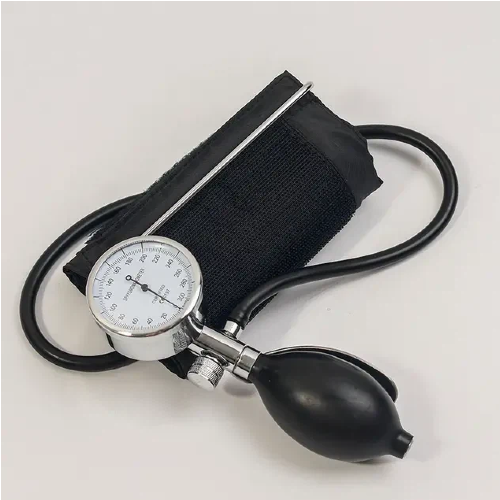
Some patients require extra attention to equipment choice and technique.
Infants and children need pediatric cuffs to avoid major reading errors. A cuff that does not fit correctly can significantly distort the result. During pediatric measurement, it also helps to reassure the child and minimize movement. Use cuffs designed specifically for pediatric care and confirm proper placement before inflation.
Patients with larger arms should be measured with a large adult or thigh cuff when appropriate. Using a cuff that is too small can falsely elevate readings. If an alternative site such as the forearm must be used, the site should be documented clearly, as readings may differ from upper-arm measurements.
In patients with arrhythmias, Korotkoff sounds may be inconsistent. In these cases, take multiple readings and average them when appropriate. Documentation should note the irregular rhythm, and clinicians may also use palpatory methods to estimate systolic pressure if auscultation is difficult.
A durable device can only remain accurate if it is properly maintained. Regular care and scheduled calibration support long-term reliability.
Before use, inspect the cuff, tubing, bulb, and gauge for cracks, loose parts, or wear. Clean surfaces according to infection control requirements. Store the device in a protective case away from moisture, heat, and direct impact.
Calibration checks should be performed according to how often the device is used. Busy clinics usually require more frequent checks than low-volume settings. Daily performance checks may include comparison against a known reference or supervisor-verified reading, while formal recalibration should be carried out by qualified service providers.
For transport during home visits or field care, protect the gauge with padding, avoid compressive loads, keep the hose free from kinks, and ensure the cuff is dry before storage.
Consistent manual blood pressure measurement depends on staff training as much as on device quality. Clinics should have a simple competency process to ensure staff can use an aneroid monitor correctly.
A practical competency checklist may include correct cuff selection, proper stethoscope placement, controlled inflation and deflation, accurate identification of systolic and diastolic values, and clear documentation. Routine refresher training can reduce user error and improve consistency across departments.
SUNNYWORLD MEDICAL supports clinical training with user guides, demonstration materials, and instructional resources that can be integrated into staff onboarding or in-service sessions.
Well-designed guides and demonstration videos help users adopt the correct technique more quickly. They can reduce confusion, lower support requests, and improve first-time correct use. SUNNYWORLD MEDICAL provides multilingual materials that help clinics standardize blood pressure measurement practice across multiple sites.
The manual auscultatory method remains an essential clinical skill, and correct use of an aneroid sphygmomanometer supports accurate, professional, and reliable blood pressure assessment in a wide range of healthcare settings. From hospitals and clinics to training institutions and home care, dependable manual monitors continue to play an important role in patient care.
SUNNYWORLD MEDICAL supplies durable, calibrated, and professionally designed aneroid blood pressure monitors for healthcare providers seeking trusted daily-use solutions. For product details, quotations, training support, and bulk ordering, please contact us for personalized assistance.
Contact us for more information and customized order support.
What should I do if blood pressure readings differ significantly between arms?
Measure both arms during the same session after the patient has rested. Use the arm with the higher reading for future monitoring unless clinical guidance suggests otherwise, and document both results clearly.
How can I check whether my aneroid device is working before a clinic shift?
Perform a quick pressure-holding test and compare one reading with a calibrated reference device according to clinic protocol. If pressure drops rapidly or readings appear inconsistent, inspect the device before use.
How can I improve auscultation in a noisy setting?
Use a good-quality stethoscope, place it firmly over the brachial artery, reduce nearby noise when possible, and make sure the patient’s arm stays relaxed and supported.
Can supplier training materials be used in staff competency checks?
Yes. SUNNYWORLD MEDICAL provides training materials that clinics can adapt into internal teaching tools, competency checklists, and observed skill assessments.