



Phone:
+86 577 65917211 /
66801577 / 66816625

Views: 0 Author: Site Editor Publish Time: 2025-10-30 Origin: Site
Cardiology depends on hearing subtle heart sounds clearly, so choosing the right cardiology stethoscope is about more than brand or price. A good model should combine strong acoustic performance, clinical reliability, and practical comfort for daily use. Sunnyworld offers cardiology-focused stethoscopes with certification support and sample programs for hospitals, clinics, and institutional buyers who want to evaluate products before procurement.
When selecting a cardiology stethoscope, objective acoustic performance matters more than general marketing claims. The device should transmit both low- and high-frequency sounds clearly so clinicians can assess heart function with confidence.
Heart sounds cover a wide range. Low-frequency sounds such as S3 and S4 require strong low-frequency transmission, while murmurs, clicks, and valve-related sounds may include higher-frequency components. A cardiology model should preserve detail across this full range rather than favoring one end of the spectrum. When possible, ask suppliers for frequency-response data or independent acoustic test results.
The diaphragm plays a major role in sound quality. Higher-grade diaphragms are built to maintain fidelity across frequencies, and tunable diaphragms or interchangeable bells allow clinicians to switch more easily between low-frequency gallops and higher-frequency murmurs. This is especially useful in busy cardiology practice where fast assessment matters.
A well-made chestpiece should provide stable acoustic coupling while reducing outside noise. Precision-machined metal chestpieces generally offer better resonance control than lightweight low-cost alternatives. Features that improve the seal against the patient’s skin can also improve sound clarity while supporting comfort.
Tubing should be thick enough to reduce sound loss and resist kinking. Excessively long tubing may weaken high-frequency detail, so balance matters. At the same time, earpieces should create a reliable seal. Soft silicone tips and adjustable binaurals help maintain a stable acoustic path and allow clinicians to hear subtle sounds more clearly during prolonged examinations.
The difference between a cardiology stethoscope and a general-purpose stethoscope is not just cost. It reflects different design priorities and different clinical roles.
General-purpose stethoscopes are built for routine exams, nursing use, and primary care. They balance durability, convenience, and affordability. A cardiology model is designed for more demanding listening tasks, such as murmur assessment, prosthetic valve follow-up, preoperative cardiac evaluation, and specialist cardiology visits where fine acoustic detail can affect patient management.
Cardiology models usually use higher-grade chestpieces, diaphragms, and tubing to improve acoustic resolution. That extra clarity may help clinicians detect faint diastolic murmurs, subtle valve dysfunction, or other low-amplitude sounds that might be harder to hear with standard instruments.
Certain cardiology assessments depend heavily on the stethoscope’s ability to reproduce subtle sounds accurately.
Timing, pitch, intensity, and radiation are all easier to evaluate when sound transmission is clear. This improves the clinician’s ability to distinguish systolic from diastolic murmurs and assess pattern changes more confidently.
Mechanical and hemodynamic sounds from prosthetic valves can be subtle but clinically meaningful. A cardiology model may help clinicians notice changes that suggest dysfunction, paravalvular leak, or early thrombosis.
Some arrhythmias and conduction abnormalities produce brief or low-amplitude acoustic clues. A stethoscope with low background noise and good transient response can help clinicians recognize these fleeting bedside findings.
In ICU or postoperative settings, background noise often makes auscultation harder. Models with better ambient-noise rejection and stable low-frequency response are more useful in these environments.
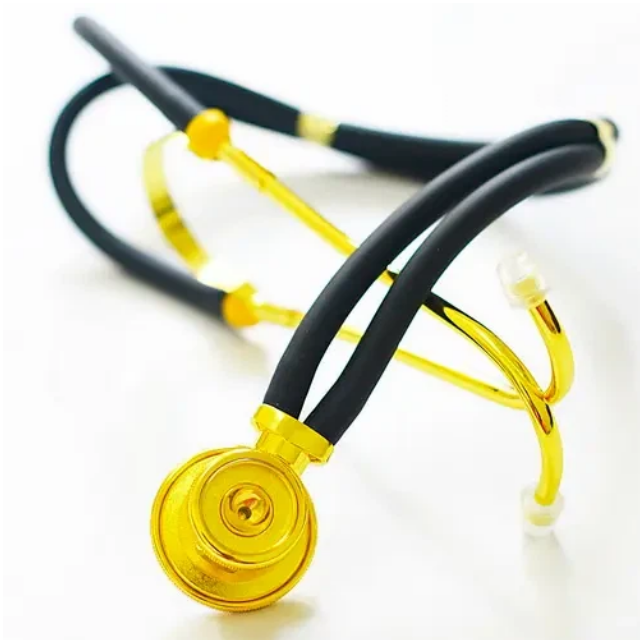
Procurement decisions should consider not only acoustics, but also safety, durability, service support, and regulatory documentation.
Patient-contact materials should be medical-grade and compatible with your facility’s disinfection procedures. Easy-to-clean tubing and removable earpieces can improve infection control and simplify maintenance.
A cardiology stethoscope is a long-term investment. It is worth checking whether the supplier offers multi-year warranty coverage and whether diaphragms, earpieces, and tubing can be replaced. Good access to spare parts helps lower total ownership cost over time.
Whenever possible, require sample units and live trials. Standardized sound demos, clinician feedback, and independent acoustic test data can make side-by-side comparison more objective. Metrics such as frequency response and signal-to-noise performance are especially useful for institutional evaluation.
For hospitals and distributors, documentation is essential. Buyers should verify the required certifications and compliance documents for their markets. Sunnyworld provides certification packages for export and institutional approval processes.
A structured checklist helps turn clinical needs into clear purchasing criteria.
· define the percentage of cardiology-focused exams in daily practice
· specify minimum acoustic expectations, especially for low-frequency sensitivity
· request sample units for hands-on trials
· compare ergonomics, weight, tubing length, and comfort during prolonged use
· confirm compatibility with cleaning protocols
· review warranty terms, spare-part support, and service options
· check certification documents and acoustic test materials
· consider pilot deployments and bulk purchasing options, including OEM branding if needed
Sunnyworld supports pilot programs, certification review, and institutional bulk supply for cardiology-focused procurement.
Hands-on testing is one of the most reliable ways to compare cardiology stethoscopes in practice.
Create a short form for clinicians to score clarity of S1–S4, murmur detail, prosthetic valve sounds, and ambient-noise rejection. Using the same scoring criteria makes comparison easier.
If possible, let clinicians test the same patient with different models without knowing the brand. This reduces bias and focuses attention on real acoustic performance.
A stethoscope should also be evaluated under normal working conditions, including common background noise. Daytime clinics, evening shifts, and higher-acuity settings may all reveal different strengths or limitations.
Unit price is only part of the decision. Long-term value depends on service life, replaceable parts, and ease of clinician adaptation.
Models with replaceable diaphragms and tubing can remain in service longer and reduce replacement cost. A short orientation period may also help clinicians adjust to the acoustic profile of a new device, improving consistency in auscultation. In busy departments, inventory planning and rotation can help reduce downtime and ensure backup units are available.
Choosing the right cardiology stethoscope depends on verified acoustic performance, practical clinical testing, and dependable regulatory support. For cardiology departments, the best model is one that combines clear low- and high-frequency transmission, comfortable daily use, and reliable long-term service.
Sunnyworld supplies cardiology-focused stethoscopes with certification support, pilot evaluation programs, and institutional bulk options to help hospitals and clinics improve diagnostic capability. To request trial units, documentation, or product details, contact us to review our cardiology stethoscope range and arrange a sample evaluation package.
Contact us today to start a pilot and receive complete certification files.
Ask for a frequency-response graph, independent acoustic sensitivity data, and standardized recorded sound samples. These materials make side-by-side comparison more reliable.
A useful trial usually includes at least two typical clinical encounters plus a short test in a noisier environment. This helps reveal both acoustic differences and ergonomic comfort.
Yes. Corrosion-resistant metal chestpieces, durable multi-layer diaphragms, and kink-resistant replaceable tubing can help maintain more consistent performance over time.
Include low-frequency cases in blinded trials and ask clinicians to score audibility during use. Supplier-provided low-frequency recordings can also support evaluation.